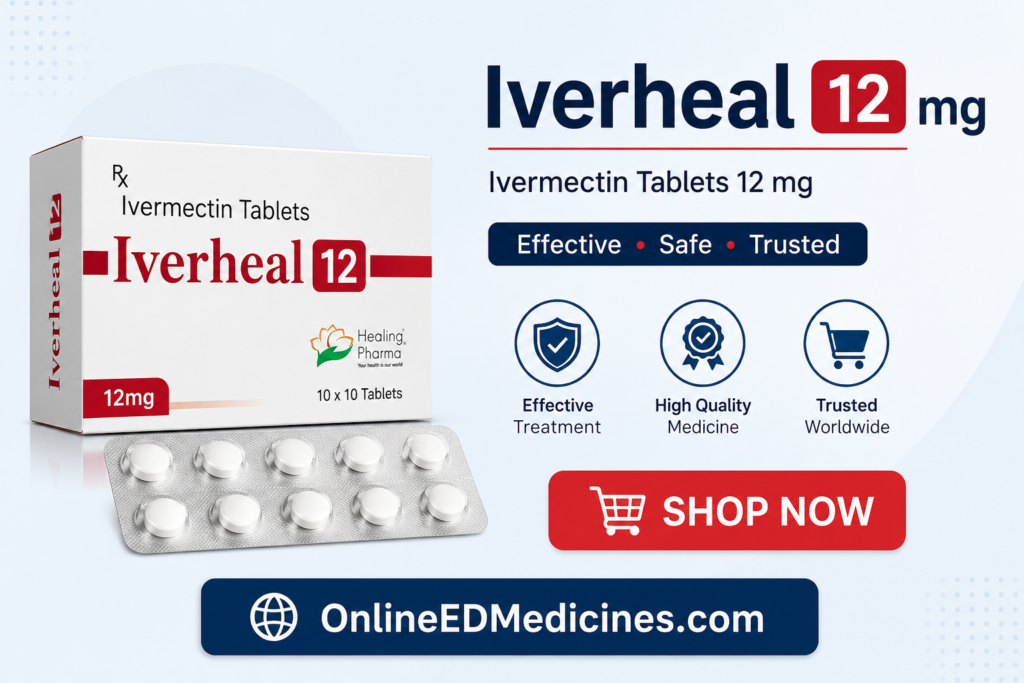
Iverheal 12 mg is an antiparasitic medicine containing ivermectin 12 mg. It is a prescription medicine used to treat certain parasitic infections. The appropriate dose and treatment schedule depend on the type of infection, body weight, age, and overall health.
What Is Iverheal 12 mg?
Iverheal 12 mg contains 12 mg of ivermectin, an antiparasitic drug. Ivermectin works against susceptible parasites by interfering with their nerve and muscle function, which can lead to paralysis and elimination of the parasites.
Because ivermectin dosing is generally weight-based and varies according to the infection being treated, a 12 mg tablet should not automatically be considered the correct dose for every person.
What Is Iverheal 12 mg Used to Treat?
Ivermectin tablets have established indications for certain parasitic infections, particularly:
1. Strongyloidiasis
Strongyloidiasis is an intestinal infection caused by the parasitic worm Strongyloides stercoralis. Ivermectin is an established treatment for intestinal, non-disseminated strongyloidiasis.
2. Onchocerciasis
Ivermectin is also used to treat onchocerciasis, commonly known as river blindness, caused by Onchocerca volvulus. It primarily acts against the parasite’s microfilariae rather than adult worms.
3. Scabies and Other Conditions
Oral ivermectin may also be prescribed by healthcare professionals for certain other parasitic conditions, including some cases of scabies or lice, depending on local medical guidance and the patient’s circumstances. These uses and dosing schedules can differ from the established tablet indications above.
How Does Iverheal 12 mg Treatment Work?
Ivermectin targets specific channels involved in the nervous and muscular systems of susceptible parasites. This interferes with normal nerve signaling and causes paralysis and death of the parasite.
Once the parasites are affected, the body can eliminate them. The exact response and time required for improvement depend on the infection and its severity.
Iverheal 12 mg Dosage and Treatment Duration
Do not choose your ivermectin dose solely because the tablet contains 12 mg. The recommended amount is calculated according to body weight and the specific infection.
For example, the current ivermectin labeling recommends approximately 200 micrograms/kg as a single oral dose for intestinal strongyloidiasis. For onchocerciasis, the recommended dose is approximately 150 micrograms/kg as a single oral dose.
Therefore, a 12 mg tablet may or may not correspond to the dose appropriate for a particular patient.
For strongyloidiasis, additional doses are generally not necessary according to the prescribing information, although follow-up testing may be recommended to confirm eradication.
For onchocerciasis, retreatment schedules can differ and are determined by the treating healthcare professional.
How Should Iverheal 12 mg Be Taken?
Take Iverheal 12 mg exactly as prescribed.
For the approved tablet indications, ivermectin tablets are generally taken orally with water. The prescribing information specifies taking the tablets on an empty stomach for strongyloidiasis and onchocerciasis.
Do not take extra tablets because symptoms have not improved immediately. Taking more ivermectin than prescribed can increase the risk of adverse effects.
Iverheal 12 mg Treatment for Scabies
Oral ivermectin can be used in selected scabies cases, particularly when a healthcare professional considers systemic treatment appropriate. However, treatment schedules for scabies can differ from those used for strongyloidiasis or onchocerciasis.
Scabies treatment may also require environmental measures and treatment of close contacts when recommended. Your doctor should determine whether oral ivermectin, a topical treatment, or a combination approach is appropriate.
Possible Side Effects
Iverheal 12 mg may cause side effects. Depending on the infection being treated, possible reactions can include:
- Nausea
- Diarrhea
- Vomiting
- Dizziness
- Weakness or fatigue
- Headache
- Abdominal discomfort
- Skin rash or itching
More serious reactions can occur, particularly with excessive doses or certain parasitic infections. Report severe or unusual symptoms to a healthcare professional promptly.
Seek urgent medical attention for serious symptoms such as severe dizziness, loss of coordination, seizures, difficulty breathing, or significant allergic reactions.
Iverheal 12 mg Safety Precautions
Before taking ivermectin, tell your healthcare professional about:
- Any allergy to ivermectin or its ingredients
- Other medicines or supplements you are taking
- Liver problems or other significant medical conditions
- Pregnancy or plans to become pregnant
- Breastfeeding
- Previous reactions to antiparasitic medicines
Ivermectin can interact with certain medicines. The FDA specifically notes that ivermectin can interact with medicines such as blood thinners, so your complete medication list should be reviewed by a healthcare professional.
Can I Take Iverheal 12 mg Without a Prescription?
It is best to use Iverheal 12 mg only after a qualified healthcare professional has determined that ivermectin is appropriate.
The correct treatment depends on identifying the infection and determining the appropriate weight-based dose. Self-treatment can result in taking an ineffective dose, delaying appropriate treatment, or experiencing avoidable side effects.
Iverheal 12 mg and COVID-19
Ivermectin should not be used to prevent or treat COVID-19 unless specifically authorized for such a use by an appropriate health authority. The FDA states that ivermectin is not approved or authorized for treating or preventing COVID-19 in people or animals.
Do not use veterinary ivermectin products as substitutes for human medicines. Animal formulations are different and can be dangerous when used by people.
What Happens If You Take Too Much Iverheal 12 mg?
Taking more ivermectin than prescribed can be dangerous. Possible overdose symptoms include nausea, vomiting, diarrhea, low blood pressure, dizziness, loss of coordination, seizures, coma, and potentially life-threatening complications.
If you suspect an overdose, seek emergency medical assistance rather than waiting for symptoms to become severe.
Frequently Asked Questions
Is Iverheal 12 mg an antibiotic?
No. Iverheal 12 mg contains ivermectin, which is an antiparasitic medicine. It is not an antibiotic for bacterial infections.
How quickly does Iverheal 12 mg work?
The response depends on the parasite and the infection being treated. Some symptoms may improve relatively quickly, while complete elimination of the infection may require follow-up testing or additional medical management.
Can everyone take Iverheal 12 mg?
No. Ivermectin is not appropriate for everyone. The appropriate dose depends on factors such as body weight, diagnosis, age, and other medicines or health conditions.
Is 12 mg always the correct ivermectin dose?
No. Ivermectin treatment is commonly weight-based. A 12 mg tablet does not mean that every patient should take one tablet.
Can I take Iverheal 12 mg for worms without testing?
You should first discuss your symptoms and possible diagnosis with a healthcare professional. Different worms and parasitic infections may require different medicines or treatment schedules.
Final Thoughts
Iverheal 12 mg is an ivermectin-containing antiparasitic medicine used for certain parasitic infections. Its treatment benefits depend on using the correct diagnosis, weight-based dose, and treatment schedule.
Because ivermectin can cause adverse effects and interact with other medicines, it should be used according to professional medical advice. Do not increase the dose, repeat treatment, or use veterinary ivermectin products without appropriate medical guidance.