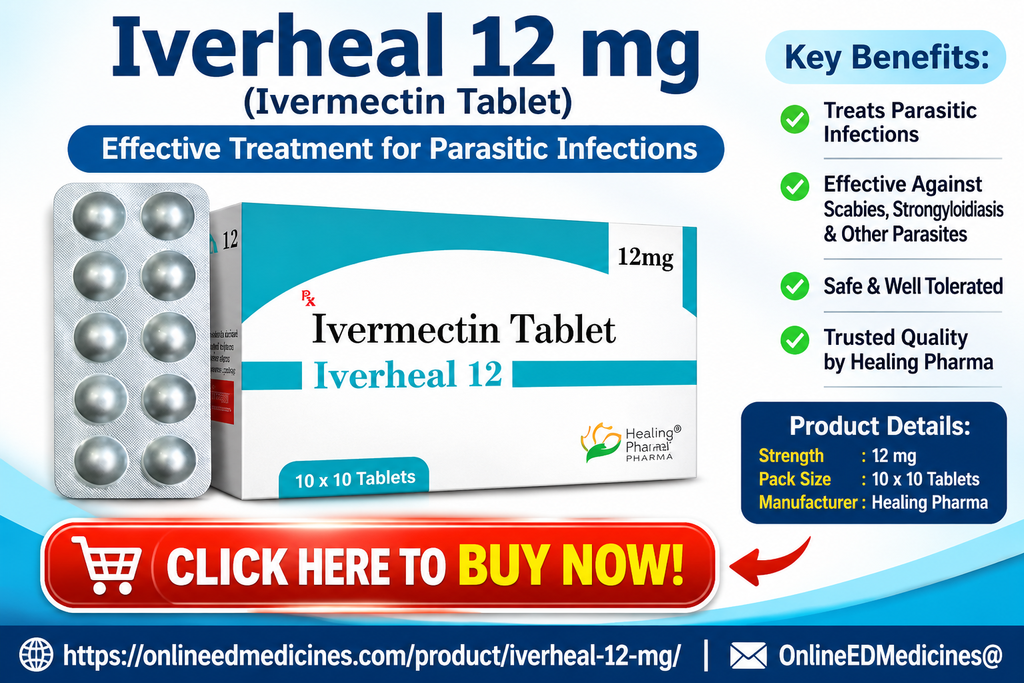
Parasitic infections are a common healthcare concern that can affect different parts of the human body, including the intestinal tract and other tissues. Appropriate diagnosis and treatment are important for managing these infections and preventing potential complications. Iverheal 12 mg is an ivermectin-based antiparasitic medicine used under medical supervision for certain parasitic infections.
Ivermectin belongs to a group of medicines known as anthelmintics. These medicines work against susceptible parasites by interfering with their nervous system and muscle function, eventually causing paralysis and death of the parasites. This action helps the body eliminate susceptible parasites.
Iverheal 12 mg contains 12 mg of ivermectin as its stated active ingredient. However, the appropriate dose depends on the diagnosed infection, body weight, medical history, and the treating healthcare professional’s instructions. The 12 mg tablet strength should not be confused with a recommended dose for every patient.
In this comprehensive product guide, we will explore Iverheal 12 mg, its active ingredient, mechanism of action, potential medical uses, precautions, side effects, and important safety information.
What Is Iverheal 12 mg?
Iverheal 12 mg is an antiparasitic tablet containing ivermectin. It is designed for use in managing certain susceptible parasitic infections when prescribed by a qualified healthcare professional.
Ivermectin has established medical uses against particular parasitic worms. Its action targets important biological processes that parasites require for normal survival and movement.
The medicine is not a general-purpose treatment for every infection. Different parasitic diseases require different diagnostic tests and treatment approaches. Therefore, patients should only use Iverheal 12 mg when a healthcare professional determines that ivermectin is appropriate.
Product Overview
- Product Name: Iverheal 12 mg
- Active Ingredient: Ivermectin
- Strength: 12 mg
- Product Category: Antiparasitic Medicine
- Drug Class: Anthelmintic
- Dosage Form: Oral Tablet
- Administration: Oral
- Intended Use: Management of certain susceptible parasitic infections under medical supervision
Always check the actual product packaging and manufacturer information to confirm the formulation and product details.
How Does Iverheal 12 mg Work?
Understanding how ivermectin works can help patients better understand its role in antiparasitic treatment.
Ivermectin acts on specific chloride channels, particularly glutamate-gated chloride channels found in many invertebrates, including susceptible parasites.
These channels help regulate nerve and muscle activity. When ivermectin interacts with them, it increases chloride ion permeability, resulting in paralysis of susceptible parasites.
The affected parasites lose their ability to maintain normal movement and essential functions. This helps the body eliminate them.
Key Mechanism of Action
- Targets susceptible parasites: Ivermectin interacts with specific biological channels in parasites.
- Disrupts nerve and muscle activity: It interferes with normal communication and muscle function.
- Causes paralysis: Susceptible parasites become unable to move and function normally.
- Supports parasite elimination: The body can subsequently eliminate affected parasites.
This mechanism explains why ivermectin is useful against certain parasitic infections. However, its effectiveness depends on the parasite involved and the clinical condition being treated.
Medical Uses of Iverheal 12 mg
Ivermectin tablets have established uses in treating certain parasitic worm infections. The specific approved indications can vary according to the country, product registration, and prescribing information.
Two established oral ivermectin indications include:
1. Strongyloidiasis
Strongyloidiasis is an intestinal parasitic infection caused by a roundworm known as Strongyloides stercoralis.
The infection can occur when infective larvae enter the body, commonly through contact with contaminated soil. Some individuals experience digestive symptoms, skin irritation, or respiratory complaints, while others may have no noticeable symptoms.
Ivermectin is an established treatment for intestinal strongyloidiasis. A healthcare professional determines the appropriate treatment according to the patient’s clinical condition.
Follow-up testing may be necessary to confirm that the infection has been successfully treated.
2. Onchocerciasis
Onchocerciasis, commonly known as river blindness, is a parasitic disease caused by Onchocerca volvulus.
It is transmitted through the bites of infected blackflies and can affect the skin and eyes.
Ivermectin is used to reduce the number of developing parasites responsible for the infection. However, it does not kill adult Onchocerca worms.
Patients may require ongoing medical monitoring and additional treatment according to their individual circumstances.
Important Medical Clarification
Ivermectin is not automatically suitable for treating every type of intestinal worm, skin condition, or parasitic infection. Other conditions require different medicines or treatment regimens.
A doctor should establish the diagnosis before recommending Iverheal 12 mg.
Potential Benefits of Iverheal 12 mg
When prescribed for an appropriate parasitic infection, ivermectin offers several clinically relevant advantages.
1. Established Antiparasitic Action
Ivermectin has a well-established role in treating particular parasitic infections. It works through a targeted mechanism that affects susceptible parasites.
2. Oral Tablet Formulation
The tablet formulation provides a convenient oral route of administration for patients who have been prescribed ivermectin.
3. Weight-Based Treatment
Ivermectin treatment can be calculated according to body weight and the diagnosed infection. This allows healthcare professionals to individualize treatment.
4. Well-Studied Active Ingredient
Ivermectin has been used in human medicine for decades. Its clinical uses, precautions, and potential adverse reactions have been extensively studied.
5. Supports Management of Specific Parasitic Diseases
When used appropriately, ivermectin can help manage infections such as intestinal strongyloidiasis and onchocerciasis.
Important: These benefits relate to the established medical properties of ivermectin. They do not guarantee that Iverheal 12 mg will be appropriate or effective for every patient.
Iverheal 12 mg Dosage and Administration
The correct ivermectin dosage depends on several factors, including:
- The type of parasitic infection.
- The patient’s body weight.
- The severity and clinical characteristics of the infection.
- Medical history and other health conditions.
- Other medicines being taken.
Ivermectin dosing for established indications is generally weight-based rather than determined simply by tablet strength.
For example, official prescribing information describes different weight-based dosing regimens for strongyloidiasis and onchocerciasis.
Consequently, a 12 mg tablet should not automatically be taken as one complete dose or repeated without medical advice.
General Administration Guidelines
- Take the medicine only as prescribed.
- Follow the instructions on the prescription label.
- Use water when swallowing the tablet.
- Follow the prescribed instructions regarding food.
- Do not increase or repeat the dose independently.
- Attend recommended follow-up appointments.
If you miss a dose, ask your doctor or pharmacist how to proceed rather than doubling the next dose.
Possible Side Effects of Iverheal 12 mg
Like other medicines, ivermectin can cause side effects. Not everyone experiences them, and their severity can vary depending on the individual and the infection being treated.
Some possible adverse effects include:
- Nausea
- Diarrhoea
- Dizziness
- Headache
- Fatigue
- Abdominal discomfort
- Skin itching or rash
Certain reactions can also occur because the body responds to dying parasites, particularly during treatment of specific infections.
Serious Side Effects
Although uncommon, serious reactions have been reported with ivermectin.
Seek immediate medical attention if you experience:
- Severe allergic reactions.
- Difficulty breathing.
- Significant swelling of the face or throat.
- Severe dizziness or fainting.
- Confusion or changes in consciousness.
- Seizures.
- Serious problems with balance or coordination.
Do not ignore unusual or severe symptoms after taking an antiparasitic medicine.
Precautions Before Taking Iverheal 12 mg
Before starting ivermectin treatment, discuss your medical history and current medications with your healthcare professional.
1. Pregnancy and Breastfeeding
If you are pregnant, planning pregnancy, or breastfeeding, consult your doctor before taking ivermectin. The potential benefits and risks must be evaluated individually.
2. Liver Health
Inform your doctor about any history of liver disease or other significant medical conditions.
3. Allergic Reactions
Avoid ivermectin if you have a known allergy to the active ingredient or any component of the formulation.
4. Medication Interactions
Ivermectin may interact with other medicines. Inform your healthcare professional about prescription drugs, non-prescription medicines, and supplements you currently use.
Special attention may be necessary when taking medicines such as blood thinners.
5. Children and Body Weight
The suitability of ivermectin for children depends on age, body weight, clinical circumstances, and applicable prescribing guidance. Do not administer adult-strength tablets to children without medical advice.
6. Avoid Veterinary Formulations
Never use ivermectin products intended for animals. Veterinary formulations may contain different concentrations and ingredients and are not interchangeable with human medicines.
Is Iverheal 12 mg Suitable for Everyone?
No. Although ivermectin has established antiparasitic uses, it is not appropriate for every individual.
A healthcare professional should assess the following before recommending treatment:
- Confirmed or suspected parasitic infection.
- Patient’s body weight.
- Age and general health.
- Pregnancy or breastfeeding status.
- History of allergies.
- Existing medical conditions.
- Current medications.
People should not take Iverheal 12 mg simply because they suspect they have parasites. Accurate diagnosis is essential for choosing the right treatment.
Iverheal 12 mg and COVID-19: Important Information
Ivermectin has sometimes been discussed as a potential treatment for COVID-19. However, it is important to understand that ivermectin tablets have not been authorized or approved by the US FDA for preventing or treating COVID-19.
Available clinical evidence has not established ivermectin as an effective treatment for COVID-19.
Iverheal 12 mg should therefore not be used for COVID-19 prevention or treatment unless future authoritative medical guidance establishes an appropriate indication.
Patients should follow evidence-based medical recommendations for respiratory infections.
Frequently Asked Questions About Iverheal 12 mg
1. What is Iverheal 12 mg used for?
Iverheal 12 mg contains ivermectin, an antiparasitic medicine used under medical supervision for certain susceptible parasitic infections. Its suitability depends on the diagnosis and local product authorization.
2. What is the active ingredient in Iverheal 12 mg?
The stated active ingredient is ivermectin, with a strength of 12 mg per tablet. Check the packaging to verify the formulation.
3. How does ivermectin work?
Ivermectin affects specific chloride channels in susceptible parasites, disrupting their nerve and muscle activity and causing paralysis.
4. Can I take Iverheal 12 mg without a prescription?
You should not self-medicate with ivermectin. Consult a qualified healthcare professional to determine whether this medicine is appropriate for your condition.
5. How long does ivermectin take to work?
The response depends on the infection being treated, the parasite involved, and individual health factors. Your doctor may recommend follow-up testing to evaluate treatment success.
6. Can I take Iverheal 12 mg every day?
Do not take ivermectin daily unless specifically directed by your healthcare professional. Treatment schedules vary according to the infection and prescribed regimen.
7. What should I avoid while taking Iverheal 12 mg?
Avoid self-adjusting the dose, using veterinary ivermectin, or combining medicines without professional advice. Inform your doctor about all medications and supplements you take.
Conclusion
Iverheal 12 mg is an ivermectin-based antiparasitic medicine intended for the management of certain susceptible parasitic infections under appropriate medical supervision.
Its active ingredient, ivermectin, works by interfering with specific nerve and muscle functions in parasites. It has established clinical applications in conditions such as intestinal strongyloidiasis and onchocerciasis.
However, correct diagnosis, individualized dosing, and awareness of potential side effects are essential for responsible treatment.
Before using Iverheal 12 mg, consult a qualified healthcare professional and verify the product information. Always purchase prescription medicines through legitimate, appropriately licensed pharmacies and follow the prescribed treatment instructions.
Medical Disclaimer: This article is intended for educational and informational purposes only. It does not replace professional medical advice, diagnosis, or treatment. Ivermectin should only be used under appropriate medical supervision.