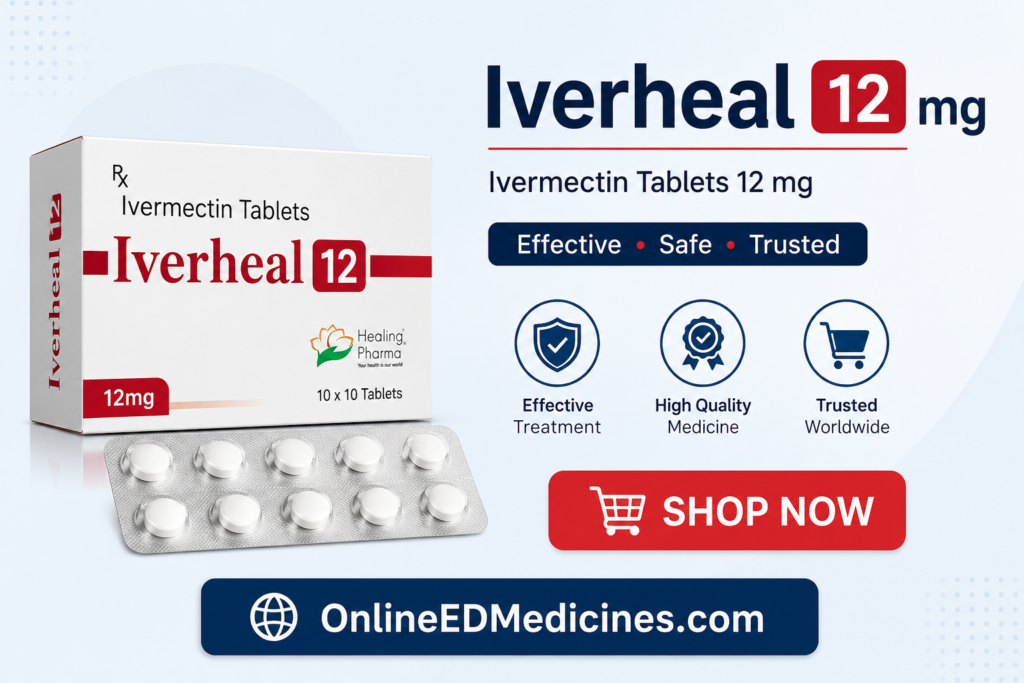
Iverheal 12 mg is an oral tablet containing ivermectin 12 mg, an antiparasitic medicine. Ivermectin belongs to a class of medicines called anthelmintics and is used to treat certain parasitic infections. Product information available in India identifies Iverheal 12 mg as containing ivermectin 12 mg and lists it as a prescription medicine.
This guide explains what Iverheal 12 is, what ivermectin is used for, how it works, possible side effects, precautions, interactions, and important safety information.
What Is Iverheal 12 mg?
Iverheal 12 mg is a tablet containing 12 mg of ivermectin. Ivermectin works against certain parasites by interfering with nerve and muscle activity in susceptible parasites, eventually causing paralysis and elimination of the parasite.
The exact dose and treatment schedule depend on the type of infection, body weight, age, medical history, and the doctor’s assessment.
What Is Ivermectin Used For?
Oral ivermectin is used for certain parasitic infections. Established oral indications include:
- Strongyloidiasis, an intestinal infection caused by Strongyloides stercoralis
- Onchocerciasis, also known as river blindness, caused by Onchocerca volvulus
Official ivermectin prescribing information confirms these uses.
Other ivermectin formulations, such as topical products, have different approved uses. Therefore, an ivermectin tablet should not automatically be considered appropriate for every condition involving parasites or skin symptoms.
How Does Iverheal 12 Work?
Ivermectin acts on specific chloride channels in susceptible parasites. This disrupts normal nerve and muscle function, causing paralysis and death of the parasite.
For strongyloidiasis, ivermectin targets the parasitic worms living in the intestinal tract. For onchocerciasis, it primarily reduces the number of developing worms and microfilariae. Ivermectin does not kill adult Onchocerca volvulus parasites, so ongoing medical follow-up may be required.
Iverheal 12 Dosage
There is no single correct dose of Iverheal 12 mg for everyone.
Ivermectin dosing is generally determined according to body weight and the specific parasitic infection. For example, official prescribing information describes weight-based dosing for strongyloidiasis and onchocerciasis rather than recommending the same number of tablets for every patient.
Because Iverheal contains 12 mg per tablet, a healthcare professional should determine how many tablets are appropriate.
Do not increase the dose, repeat treatment, or take ivermectin more frequently than prescribed.
How Should Iverheal 12 Be Taken?
Follow the instructions provided by your doctor or pharmacist.
For oral ivermectin tablets, official prescribing information recommends taking the tablets on an empty stomach with water.
General precautions include:
- Take the medicine exactly as prescribed.
- Swallow the tablet with water.
- Do not take additional tablets simply because symptoms have not disappeared immediately.
- Do not share the medicine with another person.
- Complete any required follow-up testing recommended by your healthcare professional.
Common Side Effects
Some people may experience side effects after taking ivermectin. Reported reactions can include:
- Nausea
- Diarrhea
- Abdominal discomfort
- Dizziness
- Headache
- Fatigue
- Itching
- Skin rash
- Vomiting
- Sleepiness
Clinical prescribing information also reports reactions such as tremor, vertigo, urticaria, and other effects.
Most mild effects may resolve, but persistent or severe symptoms should be discussed with a healthcare professional.
Serious Side Effects and Warning Signs
Rare but serious reactions have been reported with ivermectin. These may include severe allergic reactions, low blood pressure, seizures, significant neurological effects, liver-related abnormalities, and severe skin reactions.
Seek urgent medical attention if you develop:
- Difficulty breathing
- Severe swelling of the face or throat
- Loss of consciousness
- Seizures
- Severe confusion
- Significant problems with balance or coordination
- Severe skin blistering or peeling
- Other rapidly worsening symptoms
Who Should Be Careful With Iverheal 12?
Tell your healthcare professional about your medical history before taking ivermectin.
Extra caution may be required if you:
- Have liver problems
- Take medicines that affect blood clotting
- Have previously had an allergic reaction to ivermectin
- Are pregnant or planning pregnancy
- Are breastfeeding
- Are taking multiple prescription or non-prescription medicines
- Have recently lived in or traveled to an area where Loa loa infection occurs
The prescribing information specifically warns about rare serious neurological complications in people with onchocerciasis who also have heavy Loa loa infection.
Iverheal 12 and Pregnancy
If you are pregnant or planning to become pregnant, talk to your doctor before taking ivermectin.
Do not start or repeat ivermectin treatment during pregnancy without professional medical advice. The decision should consider the potential benefits and risks for the individual patient.
Iverheal 12 and Breastfeeding
If you are breastfeeding, discuss ivermectin use with your healthcare professional before taking it. Your doctor can consider your specific infection, treatment alternatives, and available safety information.
Iverheal 12 Drug Interactions
Ivermectin can interact with other medicines.
One documented concern is the potential interaction with warfarin, a blood-thinning medicine. Post-marketing reports have described increased INR when ivermectin was used with warfarin.
Always tell your doctor about all medicines and supplements you use before starting treatment.
Can Iverheal 12 Be Used for COVID-19?
Ivermectin should not be used to prevent or treat COVID-19 unless specifically directed as part of an appropriate medical decision.
The FDA states that ivermectin has not been authorized or approved for preventing or treating COVID-19 and that available clinical-trial evidence does not demonstrate effectiveness for COVID-19 in humans.
Ivermectin should therefore not be self-medicated for COVID-19.
Can Animal Ivermectin Be Used by Humans?
No.
Animal ivermectin products are formulated and labeled for animals and may have different concentrations or inactive ingredients. The FDA warns that animal ivermectin products should not be used by people.
Use only a legitimate human medicine prescribed or recommended by a qualified healthcare professional.
What Happens If Too Much Ivermectin Is Taken?
Taking more ivermectin than prescribed can be dangerous.
Overdose or excessive exposure may cause symptoms such as nausea, vomiting, dizziness, low blood pressure, impaired coordination, seizures, altered consciousness, coma, and potentially life-threatening complications.
If you suspect that you or someone else has taken too much ivermectin, seek urgent medical care rather than waiting for symptoms to develop.
Iverheal 12 Follow-Up
Treatment does not always mean that follow-up is unnecessary.
For strongyloidiasis, healthcare professionals may recommend repeat stool examinations to confirm that the infection has cleared. For onchocerciasis, repeated monitoring and treatment may be necessary because ivermectin does not eliminate adult worms.
Frequently Asked Questions
Is Iverheal 12 the same as ivermectin?
Iverheal 12 mg is a branded tablet containing 12 mg of ivermectin, according to available Indian product information.
Is Iverheal 12 an antibiotic?
No. Ivermectin is an antiparasitic medicine, not an antibiotic.
Can I take Iverheal 12 without a prescription?
It is best to use ivermectin only when it has been recommended or prescribed by a qualified healthcare professional. This is particularly important because the appropriate dose depends on the infection and body weight.
Can I take Iverheal 12 for every type of worm infection?
No. Ivermectin is effective against specific parasites and is not a universal treatment for every worm infection. The correct medicine should be selected after identifying the suspected infection.
Does ivermectin kill all parasites?
No. Ivermectin acts against susceptible parasites, but it does not treat every type of parasite.
Does ivermectin treat COVID-19?
Ivermectin is not FDA-approved or authorized for prevention or treatment of COVID-19, and the FDA states that clinical-trial evidence does not demonstrate effectiveness for COVID-19 in humans.
Final Takeaway
Iverheal 12 mg contains ivermectin, an antiparasitic medicine used for certain parasitic infections. Its appropriate dose depends on the patient’s condition and body weight, so it should not be taken according to a generic dosing schedule.
Although ivermectin can be an effective treatment for specific parasitic infections, incorrect dosing or inappropriate use can cause serious adverse effects. Use a genuine human formulation, follow professional medical advice, and seek medical attention for severe or unusual symptoms.