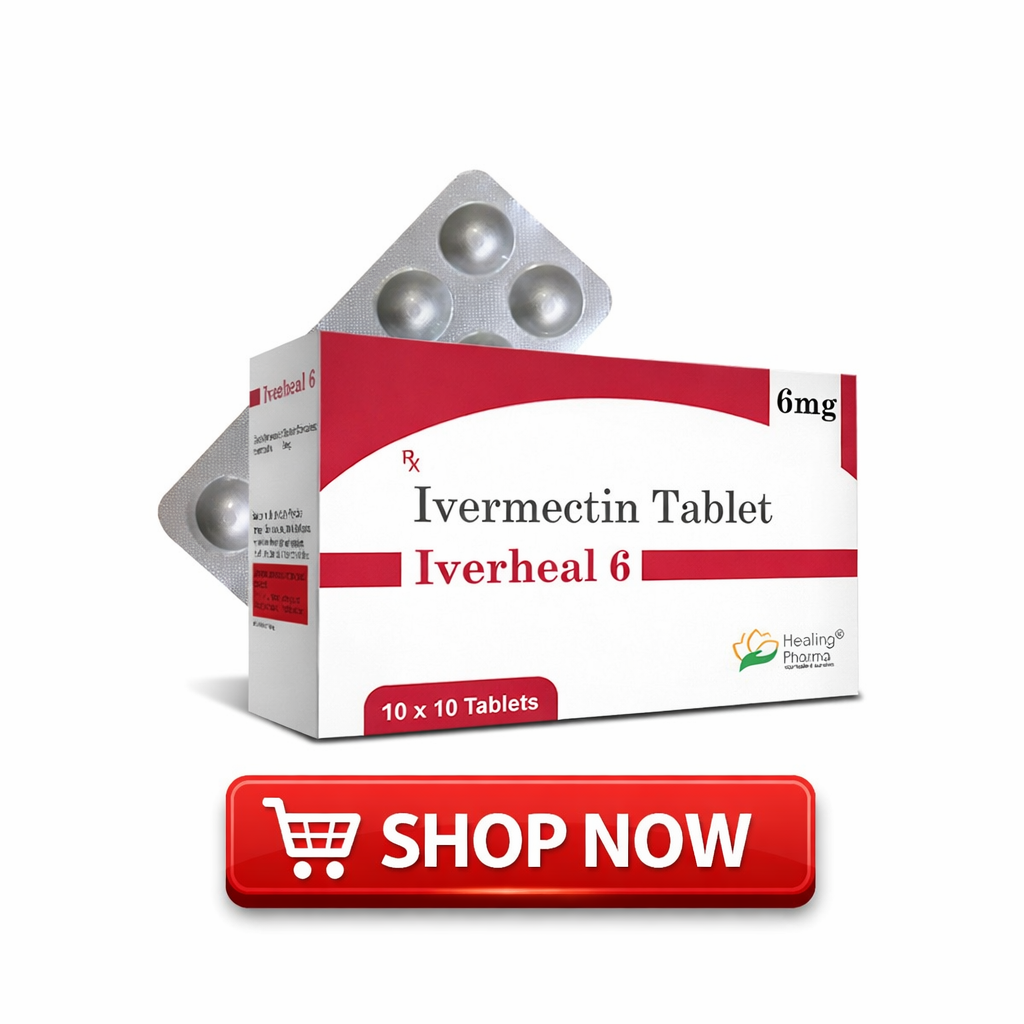
Iverheal 6 mg Dosage: Uses, Dose by Weight, How to Take, Side Effects & Precautions
Iverheal 6 mg contains ivermectin, an antiparasitic medicine used to treat certain infections caused by parasites. The appropriate ivermectin dose is not the same for every person. It depends on the infection being treated, body weight, age, medical history, and the treatment guidelines being followed.
A 6 mg tablet should therefore not be treated as a standard “one tablet per day” medicine. For some infections, ivermectin is given as a single weight-based dose, while other conditions require repeated doses. Taking more tablets than prescribed does not make treatment work faster and can increase the risk of side effects.
This guide explains Iverheal 6 mg dosage, ivermectin dose by body weight, how to take Iverheal 6 mg, dosage for different parasitic infections, missed doses, overdose, side effects, precautions, and frequently asked questions.
What Is Iverheal 6 mg?
Iverheal 6 mg is an oral tablet containing 6 mg of ivermectin. Ivermectin belongs to the antiparasitic class of medicines and works against susceptible parasites.
Depending on the medical condition, ivermectin may be prescribed for infections such as strongyloidiasis and onchocerciasis. It can also be used orally for scabies in appropriate circumstances. The exact dose and treatment schedule differ between these conditions.
The strength of the tablet does not determine the correct dose by itself. A healthcare professional may prescribe part of a tablet, multiple tablets, or a weight-based amount depending on the patient’s weight and infection.
Iverheal 6 mg Dosage at a Glance
| Condition | Common ivermectin dosing guidance* |
|---|---|
| Strongyloidiasis | Approximately 200 mcg/kg orally for 1–2 days |
| Onchocerciasis | Approximately 150 mcg/kg orally as a single dose |
| Classic scabies | 200 mcg/kg per dose, with a second dose 7–14 days later |
| Other conditions | Dose varies according to the specific infection and medical guidance |
*These are general clinical dosing references, not a personal prescription. The appropriate treatment should be confirmed by a qualified healthcare professional.
Why Is Iverheal 6 mg Dosage Based on Weight?
Ivermectin is commonly dosed according to micrograms per kilogram (mcg/kg) rather than simply prescribing the same number of tablets to every patient.
For example, a person weighing 30 kg and a person weighing 70 kg would not necessarily require the same total amount of ivermectin. The tablet strength is only one part of calculating the final dose.
This is why patients should not decide how many Iverheal 6 mg tablets to take based only on the severity of symptoms.
Iverheal 6 mg Dosage for Strongyloidiasis
Strongyloidiasis is an intestinal infection caused by Strongyloides stercoralis.
CDC guidance lists ivermectin as first-line therapy for strongyloidiasis. The recommended dose is approximately 200 mcg/kg orally for 1–2 days, depending on the clinical situation.
For certain patients, follow-up testing may be recommended. CDC advises follow-up stool examinations 2–4 weeks after treatment when stool testing was positive and symptoms persist, to help confirm whether the infection has been cleared.
Example of Weight-Based Dosing
The amount of ivermectin corresponding to 200 mcg/kg can be calculated as:
Body weight × 0.2 mg = approximate ivermectin dose
For example:
- 25 kg × 0.2 mg = 5 mg
- 40 kg × 0.2 mg = 8 mg
- 60 kg × 0.2 mg = 12 mg
- 75 kg × 0.2 mg = 15 mg
These examples demonstrate why a fixed 6 mg dose is not automatically appropriate for everyone. Tablet rounding and the actual treatment schedule should be determined by a healthcare professional.
Iverheal 6 mg Dosage for Onchocerciasis
Onchocerciasis, also called river blindness, is caused by Onchocerca volvulus.
Ivermectin is the treatment of choice because it kills microfilariae, the immature forms of the parasite. It does not kill adult worms. CDC recommends approximately 150 mcg/kg orally in one dose, with treatment intervals determined by the clinical and public-health setting.
There is no evidence that prolonged daily ivermectin treatment provides additional benefit for onchocerciasis compared with recommended treatment schedules. Higher-than-recommended doses can increase the risk of adverse effects.
Iverheal 6 mg Dosage for Scabies
Scabies is caused by infestation with the human itch mite Sarcoptes scabiei.
When oral ivermectin is selected for classic scabies, CDC guidance recommends 200 mcg/kg per dose, with a second dose given 7–14 days later. CDC notes that oral ivermectin has limited activity against scabies eggs, which is why repeat treatment is used.
Oral ivermectin is not FDA-approved specifically for scabies in the United States, although it is recognized as a treatment option in CDC clinical guidance.
For scabies, CDC guidance recommends taking oral ivermectin with food. This differs from the empty-stomach instructions used for some other ivermectin indications.
Iverheal 6 mg Dosage for Children
Ivermectin dosing in children requires particular care because it is generally based on body weight.
The safety of ivermectin has not been established for children weighing less than 15 kg for several indications. CDC treatment guidance therefore lists weight below 15 kg as a precaution for conditions such as strongyloidiasis and onchocerciasis.
Do not give an Iverheal 6 mg tablet to a child simply because an adult is taking the same medicine.
A pediatric dose should be determined by a healthcare professional based on:
- Child’s weight
- Age
- Type of infection
- Medical history
- Other medicines being taken
Iverheal 6 mg Dosage for Adults
Adults should not automatically take one 6 mg tablet daily.
The appropriate dose depends on the infection and body weight. For example, recommended ivermectin exposure is approximately 200 mcg/kg for strongyloidiasis and 150 mcg/kg for onchocerciasis.
This means that two adults with different body weights may receive different total doses.
Always follow the prescription or treatment instructions provided by your healthcare professional.
How to Take Iverheal 6 mg
Take Iverheal exactly as prescribed.
General instructions include:
- Take the medicine at the recommended time.
- Swallow the tablet with water unless your doctor gives different instructions.
- Follow the prescribed number of doses.
- Do not take extra tablets for faster results.
- Do not repeat treatment without medical advice.
- Follow the food instructions for your specific condition.
Food instructions can differ according to the indication. FDA labeling for ivermectin used for strongyloidiasis and onchocerciasis specifies taking tablets on an empty stomach with water, while CDC scabies guidance recommends oral ivermectin with food.
Can Iverheal 6 mg Be Taken Every Day?
Not unless specifically prescribed.
Daily ivermectin is not a standard schedule for every parasitic infection.
For example, strongyloidiasis may be treated with 200 mcg/kg for 1–2 days, while onchocerciasis generally uses a single 150 mcg/kg dose with repeat treatment determined by the clinical setting. CDC specifically notes that prolonged daily treatment for onchocerciasis does not provide an established benefit over recommended treatment schedules.
Taking Iverheal 6 mg every day without medical supervision can expose you to unnecessary medication and potentially increase adverse effects.
What If I Miss an Iverheal 6 mg Dose?
The appropriate response depends on the prescribed treatment schedule.
If you forget a scheduled dose:
- Do not automatically take two doses together.
- Check your prescription instructions.
- Contact your doctor or pharmacist if you are unsure.
- Continue according to the recommended schedule.
Because ivermectin can be prescribed as a single dose, a short course, or a repeated regimen, there is no universal missed-dose instruction for every patient.
Iverheal 6 mg Overdose
Taking too much ivermectin can increase the risk of toxicity and unwanted effects.
The FDA prescribing information reports adverse effects associated with ivermectin exposure including rash, edema, headache, dizziness, weakness, nausea, vomiting, and diarrhea. More serious neurological or respiratory effects have also been reported.
Do not take additional Iverheal tablets because symptoms have not improved immediately.
If you accidentally take substantially more than prescribed, contact a healthcare professional or seek urgent medical advice, particularly if symptoms such as severe dizziness, confusion, difficulty walking, breathing problems, or seizures occur.
Iverheal 6 mg Side Effects
Iverheal 6 mg may cause side effects. The type and severity can vary depending on the dose, infection, and individual response.
Common Side Effects
Possible effects include:
- Headache
- Dizziness
- Nausea
- Diarrhea
- Abdominal discomfort
- Weakness
- Fatigue
- Rash
- Itching
The FDA prescribing information also lists edema, vomiting, and other adverse effects among reported reactions.
Serious Side Effects
Seek medical attention if you experience:
- Severe dizziness or weakness
- Confusion
- Loss of coordination
- Seizures
- Difficulty breathing
- Severe allergic reaction
- Severe rash
- Significant swelling
- Serious vision or neurological problems
Some reactions can also result from the death of parasites, particularly when ivermectin is used for onchocerciasis.
Iverheal 6 mg and Mazzotti-Type Reactions
Patients receiving ivermectin for onchocerciasis may experience reactions associated with the death of microfilariae.
Possible symptoms include:
- Fever
- Rash
- Itching
- Muscle or joint pain
- Swollen or tender lymph nodes
- Eye irritation
These reactions can be uncomfortable and should be discussed with a healthcare professional, particularly when symptoms are severe.
Iverheal 6 mg During Pregnancy
Do not take Iverheal 6 mg during pregnancy without medical advice.
Ivermectin use during pregnancy requires an assessment of the potential benefits and risks. CDC guidance lists pregnancy among the relative contraindications for ivermectin treatment of strongyloidiasis and notes limited pregnancy data for onchocerciasis.
If you are pregnant or planning pregnancy, tell your doctor before treatment.
Iverheal 6 mg While Breastfeeding
Tell your healthcare professional if you are breastfeeding before taking ivermectin.
The decision to use ivermectin should consider the specific infection, the mother’s health, available safety information, and possible treatment alternatives.
Do not self-medicate while breastfeeding.
Iverheal 6 mg and Liver Problems
Tell your doctor if you have liver disease or abnormal liver tests before taking Iverheal.
Your medical history can influence whether ivermectin is appropriate and whether additional monitoring is required.
Iverheal 6 mg and Loa loa Infection
Patients who have lived in or traveled to regions where Loa loa infection occurs should inform their healthcare professional before receiving ivermectin.
In people with certain levels of Loa loa infection, ivermectin can cause severe neurological reactions. CDC recommends expert consultation before treating onchocerciasis when loiasis may be present.
Iverheal 6 mg Drug Interactions
Before taking Iverheal, tell your doctor about all medicines and supplements you use.
Potentially relevant medicines may include:
- Warfarin and other anticoagulants
- Certain antibiotics
- Other antiparasitic medicines
- Medicines affecting the nervous system
- Prescription medicines
- Over-the-counter medicines
- Herbal supplements
Drug interactions can vary according to the treatment and the individual. Do not stop any prescribed medicine without professional advice.
Iverheal 6 mg With Food
Whether Iverheal should be taken with food depends on the infection being treated.
For some labeled ivermectin uses, tablets are taken with water on an empty stomach. The FDA prescribing information specifies this for strongyloidiasis and onchocerciasis.
For classic scabies, CDC recommends oral ivermectin with food to increase bioavailability.
Therefore, follow the instructions specifically provided for your condition.
How Long Does Iverheal 6 mg Take to Work?
Ivermectin begins acting against susceptible parasites after it is absorbed, but symptom improvement does not necessarily happen immediately.
The time required for symptoms to improve depends on:
- Type of parasite
- Severity of infection
- Treatment schedule
- Individual response
- Whether reinfection occurs
For scabies, itching can continue even after the mites have been eliminated because the skin can remain inflamed. Persistent symptoms do not automatically mean that another dose should be taken.
How Long Does Iverheal 6 mg Stay in the Body?
The duration of ivermectin in the body depends on pharmacokinetic factors, including metabolism and elimination.
The important point for patients is that the medicine’s presence in the body does not mean that another dose should automatically be taken.
Follow the prescribed schedule rather than taking additional tablets based on how long you think the medicine remains active.
Iverheal 6 mg Dosage Precautions
Before starting treatment, tell your doctor if you:
- Are pregnant or breastfeeding
- Weigh less than 15 kg
- Have liver disease
- Have neurological conditions
- Have a history of ivermectin allergy
- Have traveled to areas where Loa loa occurs
- Take warfarin or other regular medicines
- Are taking other antiparasitic medicines
These details can affect the safety and suitability of ivermectin treatment.
How to Store Iverheal 6 mg
Store Iverheal 6 mg according to the instructions on its packaging.
Generally:
- Keep tablets in their original packaging.
- Store them in a dry place.
- Protect them from excessive heat and moisture.
- Keep them away from direct sunlight.
- Keep the medicine out of children’s reach.
- Do not use expired or damaged tablets.
Frequently Asked Questions About Iverheal 6 mg Dosage
What is the usual Iverheal 6 mg dosage?
There is no single usual dose for every patient. Ivermectin is generally prescribed according to body weight and the infection being treated.
Can I take one Iverheal 6 mg tablet daily?
Not unless your doctor specifically recommends daily treatment. Many ivermectin regimens involve a single dose or a limited number of doses.
How many Iverheal 6 mg tablets should I take?
The number of tablets depends on your weight, infection, and prescribed ivermectin dose. Do not calculate the number yourself without medical advice.
Is Iverheal 6 mg dosage based on weight?
Yes. Many ivermectin treatment regimens are weight-based. For example, CDC recommends approximately 200 mcg/kg for strongyloidiasis and 150 mcg/kg for onchocerciasis.
What is the ivermectin dose for strongyloidiasis?
CDC recommends approximately 200 mcg/kg orally for 1–2 days for strongyloidiasis, depending on the clinical situation.
What is the ivermectin dose for onchocerciasis?
CDC recommends approximately 150 mcg/kg orally in one dose for onchocerciasis, with the treatment interval determined by the clinical setting.
What is the ivermectin dose for scabies?
For classic scabies, CDC recommends 200 mcg/kg per dose, with two doses given 7–14 days apart. Oral ivermectin is not FDA-approved specifically for scabies in the United States.
Can I take Iverheal 6 mg twice a day?
Do not take Iverheal twice a day unless this has specifically been prescribed for your condition. Taking additional doses without medical advice can increase the risk of side effects.
Can I take Iverheal 6 mg with food?
It depends on the condition. Some ivermectin regimens are taken on an empty stomach with water, whereas CDC scabies guidance recommends taking oral ivermectin with food.
What should I do if I take too much Iverheal 6 mg?
Contact a healthcare professional or poison-control service for advice. Seek urgent medical attention if you develop severe dizziness, confusion, difficulty breathing, seizures, or other serious symptoms.
Can children take Iverheal 6 mg?
Children should receive ivermectin only when recommended by a healthcare professional. Safety has not been established for children weighing less than 15 kg for several indications.
Can I take Iverheal 6 mg during pregnancy?
Do not self-use ivermectin during pregnancy. Discuss the infection and treatment options with your doctor.
Can I take Iverheal 6 mg every week?
Only if a healthcare professional has prescribed a repeated weekly schedule for your specific condition. Do not create a weekly regimen yourself.
What if I miss my Iverheal dose?
Do not automatically double the next dose. Ask your doctor or pharmacist what to do based on your specific treatment schedule.
Does a higher Iverheal dose work faster?
No. Taking more ivermectin than recommended does not guarantee faster recovery and can increase the risk of adverse effects. CDC specifically notes that higher-than-recommended doses for onchocerciasis are more likely to cause side effects and may be harmful.
Can I use Iverheal 6 mg for any parasite?
No. Ivermectin is effective against certain susceptible parasites but is not a universal treatment for every parasitic infection. The infection should be diagnosed before treatment.
Conclusion
Iverheal 6 mg dosage should be determined according to the infection, body weight, and individual medical circumstances. Ivermectin is not a medicine that should automatically be taken as one 6 mg tablet every day.
For strongyloidiasis, CDC recommends approximately 200 mcg/kg orally for 1–2 days. For onchocerciasis, the recommended dose is approximately 150 mcg/kg orally as one dose. For classic scabies, oral ivermectin may be used at 200 mcg/kg per dose, with a second dose 7–14 days later when appropriate.
Because the correct amount can differ significantly between patients, do not increase, decrease, repeat, or extend Iverheal treatment without professional advice. If you have pregnancy, breastfeeding, liver problems, take other medicines, weigh less than 15 kg, or may have Loa loa infection, consult a healthcare professional before using ivermectin.