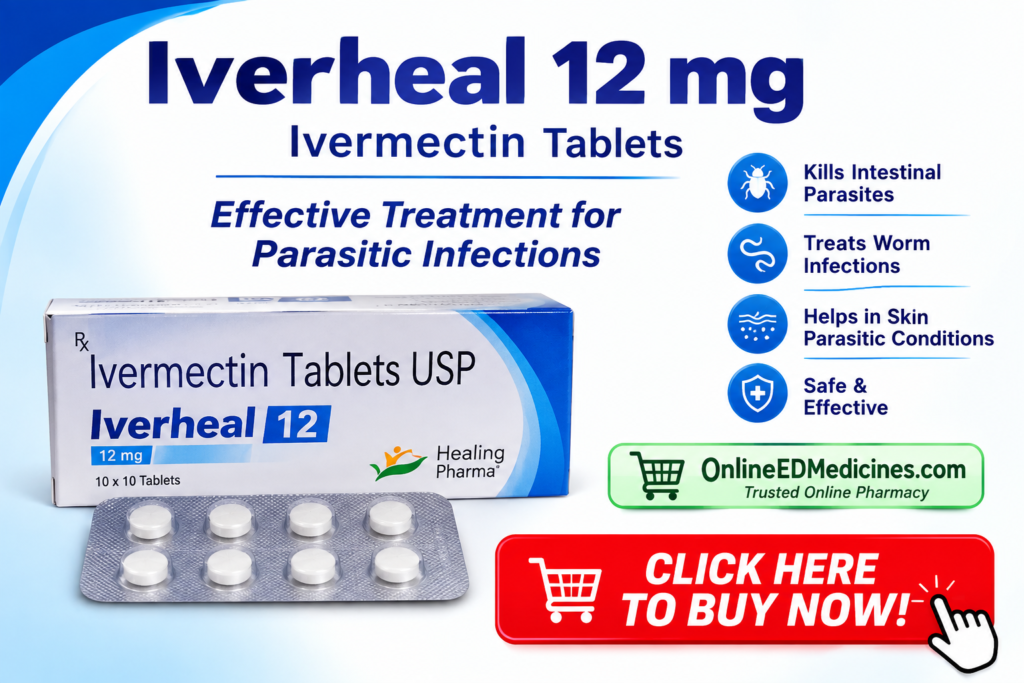
Iverheal 12 mg is an oral antiparasitic tablet containing ivermectin 12 mg as its active ingredient. It belongs to the avermectin class of medicines and is used for treating certain parasitic infections, including intestinal strongyloidiasis and onchocerciasis, where supported by prescribing information and clinical guidelines. The product is manufactured by Healing Pharma and is intended for human use as a prescription medicine. The appropriate dose is not determined by tablet strength alone; it depends on the infection being treated, body weight, and a medical assessment by a qualified healthcare professional. Ivermectin should only be taken under medical supervision. Iverheal 12 mg may be available through online pharmacies, subject to prescription requirements applicable in your jurisdiction. Confirm legitimacy, shipping options, and payment methods before ordering.
What Is Iverheal 12 Mg?
Iverheal 12 mg is a tablet formulation containing ivermectin 12 mg. Ivermectin is a macrocyclic lactone antiparasitic medicine with established human uses against certain parasitic infections. It works by affecting the nerve and muscle function of susceptible parasites, resulting in their paralysis and elimination from the body.
Iverheal is a brand name — ivermectin is the active ingredient. The 12 mg strength indicates the amount of ivermectin in each tablet. However, the correct dose is not simply a matter of taking one tablet. Ivermectin dosing is weight-based and calculated according to the specific infection being treated. A healthcare professional determines how many tablets are required to achieve the appropriate dose for an individual patient based on body weight and clinical condition.
The product is intended for human use and is classified as a prescription medicine in most jurisdictions, including Australia (Schedule 4) and the United States.
What Is Iverheal 12 Mg Used For?
Iverheal 12 mg is used to treat certain parasitic infections. The following indications are supported by prescribing information and clinical guidelines for ivermectin. Not every indication listed below is FDA-approved for the branded reference product (Stromectol); some are supported by clinical evidence and treatment guidelines. Always follow the product label and professional guidance.
Strongyloidiasis
Strongyloidiasis is an infection caused by the nematode parasite Strongyloides stercoralis. This parasite can remain in the intestines for years if untreated and may cause serious complications in people with weakened immune systems. Ivermectin is identified by the CDC as first-line therapy for strongyloidiasis, with dosing based on body weight. A single dose is often effective, but follow-up stool examinations may be required to confirm that the infection has cleared, particularly in patients with persistent symptoms.
Onchocerciasis (River Blindness)
Onchocerciasis, also called river blindness, is caused by the nematode parasite Onchocerca volvulus. Adult worms live in the body and produce microfilariae, which are immature forms of the parasite responsible for many symptoms, including skin and eye problems. Ivermectin targets and reduces the microfilariae rather than killing adult worms. Because adult worms can continue producing microfilariae over time, repeated treatment may be necessary at intervals determined by clinical assessment and public health protocols.
Scabies
Scabies is a skin infestation caused by the mite Sarcoptes scabiei. Standard treatment is generally topical, such as permethrin cream. Oral ivermectin may be considered when topical treatment has not been effective, is impractical, or in cases of crusted scabies. The CDC notes that oral ivermectin is not FDA-approved for scabies in the United States, although it is used in clinical practice and treatment guidelines. Treatment commonly involves two weight-based doses because ivermectin has limited ovicidal activity — meaning it may not kill the eggs, and a second dose is needed to target newly hatched mites.
Other Parasitic Infections
Ivermectin has been used for other parasite-specific infections, including cutaneous larva migrans and certain filarial infections, where supported by clinical evidence and treatment guidelines. However, ivermectin is not an appropriate treatment for every type of worm or parasitic infection. It is important to distinguish between established uses supported by prescribing information, off-label uses guided by clinical evidence, and conditions where ivermectin should not be presented as an approved treatment. The specific diagnosis should be confirmed before treatment.
How Does Iverheal 12 Mg Work?
Ivermectin works by targeting the nervous system of susceptible parasites. It binds to glutamate-gated chloride channels found in the nerve and muscle cells of invertebrate parasites. When ivermectin binds to these channels, it increases the flow of chloride ions into the cells. This increased chloride permeability causes the cells to become hyperpolarised, meaning they cannot respond normally to nerve signals. The result is paralysis of the parasite. Once paralysed, the parasite can no longer move or feed, and it is eventually cleared from the body.
These chloride channels are specific to invertebrates and are not found in the same form in humans, which is why ivermectin can target parasites without directly affecting human nerve and muscle function at recommended doses.
What Happens to the Parasites After Ivermectin?
Once ivermectin paralyses the parasites, they can no longer maintain their position in the body or continue their life cycle. The body’s natural processes then clear the paralysed parasites. The timeframe depends on the type of parasite, the severity of the infection, and the individual’s immune response.
Does Ivermectin Kill Adult Worms?
Ivermectin does not kill every life stage of every parasite. For onchocerciasis, the CDC specifically notes that ivermectin kills microfilariae but not adult Onchocerca worms. This is why repeated treatment may be necessary — adult worms can continue producing new microfilariae over time. For other infections, such as strongyloidiasis, ivermectin is effective against the parasites, but follow-up testing is still recommended to confirm clearance. Effectiveness against different life stages varies by parasite, and treatment decisions should be based on professional guidance.
Iverheal 12 Mg Dosage
Ivermectin should not be self-dosed. The correct dose depends on multiple factors and must be prescribed by a qualified healthcare professional.
How Much Ivermectin Is Usually Prescribed?
The dose depends on:
- Infection being treated — Different parasitic infections require different dosing regimens
- Body weight — Ivermectin dosing is weight-based, calculated as micrograms per kilogram
- Age — Age and weight thresholds apply, particularly for children
- Immune status — Patients with weakened immune systems may require different dosing
- Treatment response — Follow-up testing may influence whether additional doses are needed
- Physician’s treatment plan — Always follow the prescribed dose and schedule
Ivermectin Dosage for Strongyloidiasis
The FDA-approved ivermectin tablet labeling uses approximately 200 micrograms per kilogram of body weight for strongyloidiasis. This is typically given as a single oral dose. In some cases, a two-dose regimen may be used. The CDC recommends follow-up stool examinations 2 to 4 weeks after treatment in patients with persistent symptoms and positive stool examination to confirm clearance of infection.
Ivermectin Dosage for Onchocerciasis
For onchocerciasis, the recommended dose is approximately 150 micrograms per kilogram of body weight, given as a single oral dose. Retreatment intervals are determined clinically and may follow public health protocols, as adult worms can continue producing microfilariae over time.
Ivermectin for Scabies
For scabies, oral ivermectin uses weight-based dosing at approximately 200 micrograms per kilogram per dose. Because ivermectin has limited ovicidal activity, a second dose is commonly required. The CDC notes that scabies experts recommend taking ivermectin with food to increase bioavailability, even though general ivermectin labeling recommends taking it on an empty stomach. This is an example of why following your healthcare professional’s specific instructions is important.
Why Iverheal 12 Mg Should Not Be Self-Dosed
Ivermectin dosing is complex and depends on the infection, body weight, immune status, and other patient-specific factors. Self-dosing can result in incorrect dosing, missed follow-up testing, or inappropriate use for conditions that ivermectin does not treat. Always consult a qualified healthcare professional before starting treatment.
How to Take Iverheal 12 Mg
Should Iverheal 12 Mg Be Taken With Food?
FDA labeling for the branded reference product (Stromectol) instructs patients to take ivermectin tablets on an empty stomach with water. However, for certain clinical uses such as scabies, some experts recommend taking ivermectin with food to increase bioavailability. Follow your healthcare professional’s specific instructions regarding food intake around the time of dosing, as guidance may differ depending on the infection being treated.
How to Swallow Iverheal 12 Mg
- Take the tablet orally by mouth
- Swallow with water
- Do not crush or chew the tablet unless specifically instructed by your healthcare professional
- Follow the prescription instructions exactly as directed
What If You Miss a Dose?
If a dose is missed, take it as soon as you remember, unless it is close to the time for the next scheduled dose. Do not take a double dose to make up for a missed one. Contact your healthcare professional if you are unsure what to do.
What Happens If You Take Too Much Ivermectin?
Taking more than the prescribed dose of ivermectin can increase the risk of adverse effects, including neurological symptoms such as dizziness, confusion, seizures, or loss of coordination. If an overdose is suspected, seek medical attention immediately. Keep the product packaging and any remaining tablets available for reference.
How Long Does Iverheal 12 Mg Take to Work?
The timeframe for ivermectin to work depends on several factors:
- The infection being treated — Different parasites respond at different rates
- Severity of the infection — More severe infections may take longer to resolve
- Individual response — Each person’s body processes and responds to the medicine differently
- Treatment regimen — Some infections require a single dose, while others need repeated doses
It is important to understand the difference between parasite killing and symptom improvement. Even after the parasites have been treated, symptoms may remain for some time. For example, scabies itching can continue for one to two weeks or longer after successful treatment, because the body’s immune response to the mites and their products takes time to subside. This does not necessarily mean the treatment has failed.
For some infections, such as strongyloidiasis, follow-up testing may be required to confirm that the infection has been cleared, even if symptoms have improved. Do not assume the infection is gone without confirmation. Your healthcare professional can provide a more specific expectation based on your individual situation.
Iverheal 12 Mg Side Effects
Common Side Effects
Common side effects associated with ivermectin may include:
- Dizziness
- Headache
- Nausea
- Diarrhea
- Abdominal discomfort
- Rash or itching
- Muscle or joint discomfort
These effects are generally mild and may resolve as the body adjusts. If they continue or become bothersome, consult a healthcare professional.
Serious Side Effects — When to Seek Medical Help
Serious side effects are uncommon but can occur. Seek medical attention if you experience:
- Severe allergic reaction, including rash, swelling of the face, lips, or throat, and difficulty breathing
- Severe rash or skin peeling, which may indicate Stevens-Johnson syndrome or toxic epidermal necrolysis
- Confusion or severe dizziness
- Vision or eye problems, such as pain, redness, or swelling
- Seizures
- Loss of coordination
- Severe neurological symptoms
- Fast, pounding, or irregular heartbeat
In onchocerciasis treatment, a reaction known as the Mazzotti reaction can occur, which may include fever, rash, joint or muscle pain, swollen or tender lymph glands, and eye irritation. This is related to the body’s response to dying microfilariae. Contact your healthcare professional if these symptoms occur.
Iverheal 12 Mg Safety Warnings & Precautions
Pregnancy
Ivermectin is classified as FDA Pregnancy Category C. Animal studies have shown teratogenic effects at doses that were also toxic to the mother, but there are no adequate and well-controlled studies in pregnant women. Ivermectin should not be used during pregnancy unless clearly needed and prescribed by a healthcare professional. Pregnancy status should be confirmed before treatment.
Breastfeeding
Ivermectin is passed into breast milk in low concentrations. A healthcare professional should determine whether treatment is appropriate during breastfeeding. In some cases, treatment may be delayed until after a certain period following childbirth.
Children and Body Weight
The CDC notes that ivermectin should not be used in persons weighing under 15 kg for strongyloidiasis treatment. Ivermectin is generally not recommended for children younger than 5 years or weighing less than 15 kg due to a theoretical risk of central nervous system adverse events. The safety and appropriateness of ivermectin in children should be determined by a healthcare professional.
Liver Disease
Patients with liver conditions should inform their healthcare professional before taking ivermectin. The safety of multiple doses in patients with severe liver disease is not well established. Dose adjustments or alternative treatment may be needed.
Kidney Disease
Patients with kidney conditions should consult a healthcare professional before use. Adjustments to ivermectin dosing are not generally required for patients with renal impairment, but overall treatment safety should be assessed by a healthcare professional.
Weakened Immune System
Patients with weakened immune systems may require special consideration. Strongyloidiasis can become serious or life-threatening in immunocompromised patients, and treatment approaches may differ. Always inform your healthcare professional about any conditions or treatments that affect your immune system.
Loa loa Infection
Important warning: Ivermectin can cause severe neurological reactions, including encephalopathy, in people with heavy Loa loa infection. Loa loa is a filarial parasite found in certain regions of Africa. If you have lived in or traveled to areas where Loa loa is endemic, inform your healthcare professional before taking ivermectin. Assessment and screening may be needed before treatment to reduce the risk of serious neurological complications.
Driving and Operating Machinery
Ivermectin may cause dizziness, lightheadedness, or fatigue. If you experience these effects, avoid driving, operating machinery, or performing tasks that require alertness until you know how the medicine affects you.
Iverheal 12 Mg Drug Interactions
Medicines That May Interact With Ivermectin
Ivermectin may interact with other medicines. Clinically relevant examples include:
- Warfarin — Ivermectin may affect the action of warfarin, a blood-thinning medicine. Monitoring may be needed
- Erythromycin and certain other antibiotics — May affect how ivermectin is processed in the body
- Other CYP3A4 inhibitors or substrates — Some medicines that affect the CYP3A4 enzyme may influence ivermectin levels
This is not a complete list of interactions. Always provide a full medicine list to your healthcare professional before starting treatment.
Ivermectin and Blood Thinners
If you are taking blood-thinning medicines such as warfarin, inform your healthcare professional before taking ivermectin. Monitoring of blood clotting parameters may be needed during and after treatment.
Ivermectin and Other Medicines
Some medicines used together with ivermectin may require attention, including certain antibiotics and medicines that affect liver enzyme activity. Discuss all current medicines with your healthcare professional.
Tell Your Doctor About All Prescription, OTC & Herbal Products
Before taking Iverheal 12 mg, inform your healthcare professional about:
- All prescription medicines you are currently taking
- Over-the-counter medicines, including pain relievers and cold medicines
- Vitamins and dietary supplements
- Herbal products and natural remedies
- Any previous allergic reactions to medicines
Iverheal 12 Mg vs Iverheal 6 Mg
| Feature | Iverheal 6 Mg | Iverheal 12 Mg |
|---|---|---|
| Active ingredient | Ivermectin | Ivermectin |
| Strength | 6 mg | 12 mg |
| Dosage form | Tablet | Tablet |
| Dose selection | Weight/condition based | Weight/condition based |
| Appropriate choice | Doctor determined | Doctor determined |
12 mg is not automatically “stronger” or better for every infection. The appropriate strength depends on the prescribed weight-based dose. A healthcare professional determines which strength is suitable based on your body weight and the infection being treated. For some patients, a combination of tablet strengths may be used to achieve the correct dose.
Iverheal 12 Mg vs Other Ivermectin Tablets
Several brands contain ivermectin as the active ingredient. The comparison below is factual and does not imply that one product is universally better than another.
| Product | Active Ingredient | Strength | Manufacturer |
|---|---|---|---|
| Iverheal 12 mg | Ivermectin | 12 mg | Healing Pharma |
| Ivercor 12 mg | Ivermectin | 12 mg | Verify |
| Ivecop 12 mg | Ivermectin | 12 mg | Verify |
All products contain the same active ingredient. The differences lie in the brand name and manufacturer. The choice between brands should be based on product availability, professional guidance, and individual circumstances.
Who Should Not Take Iverheal 12 Mg Without Medical Advice?
Do not take Iverheal 12 mg without consulting a healthcare professional if any of the following apply:
- Known allergy to ivermectin or any component of the tablet
- Pregnancy
- Breastfeeding
- Children below the relevant weight threshold (under 15 kg)
- Suspected or confirmed Loa loa infection
- Liver disease
- Significant immune suppression
- Taking multiple medications, especially blood thinners
This list is not exhaustive. Always consult a healthcare professional before starting treatment.
Iverheal 12 Mg and Scabies
Is Iverheal 12 Mg Used for Scabies?
Yes, oral ivermectin may be used for scabies, particularly when topical treatments have not been effective or are impractical. However, oral ivermectin is not FDA-approved for scabies in the United States, although it is used in clinical practice and treatment guidelines.
How Oral Ivermectin Treats Scabies
Oral ivermectin works systemically to target scabies mites. It paralyses the mites by affecting their nervous system, similar to how it works against other parasites. The dose is weight-based at approximately 200 micrograms per kilogram.
Why a Second Dose May Be Needed
Ivermectin has limited ovicidal activity, meaning it may not kill scabies mite eggs. A second dose is commonly required to target newly hatched mites that were not affected by the first dose. The second dose is typically given 7 to 14 days after the first.
Should Household Contacts Be Treated?
The WHO notes that household treatment is important to prevent reinfestation. Close contacts may need to be treated even if they do not have symptoms, as asymptomatic carriers can contribute to ongoing transmission. Follow your healthcare professional’s guidance on treating household members.
Why Itching Can Continue After Treatment
Itching can continue for one to two weeks or longer after successful scabies treatment. This is caused by the body’s ongoing immune response to the dead mites and their products, not by active infection. If itching persists beyond a few weeks or if new lesions appear, consult your healthcare professional, as this may indicate reinfestation or treatment failure.
Iverheal 12 Mg and Onchocerciasis
What Is River Blindness?
Onchocerciasis, or river blindness, is a parasitic infection caused by the nematode Onchocerca volvulus. It is transmitted through the bite of infected blackflies that breed near fast-flowing rivers and streams. The infection can cause severe itching, skin changes, and eye damage that may lead to vision loss.
How Ivermectin Helps
Ivermectin reduces the number of microfilariae in the body, which are immature forms of the parasite responsible for many symptoms. By reducing the microfilariae load, ivermectin helps relieve symptoms and reduce the risk of further complications.
Why Treatment May Need to Be Repeated
Ivermectin kills microfilariae but does not kill adult worms. Adult worms can live for years and continue to produce new microfilariae. This means repeated treatment may be necessary at intervals determined by clinical assessment and public health protocols.
Why Loa loa Screening Matters
In regions where Loa loa is endemic, screening for Loa loa infection before ivermectin treatment is important. In people with a high Loa loa microfilariae count, ivermectin can cause serious neurological reactions, including encephalopathy. A healthcare professional may need to assess the risk and consider screening before treatment.
Iverheal 12 Mg and Strongyloidiasis
What Is Strongyloidiasis?
Strongyloidiasis is an infection caused by the parasite Strongyloides stercoralis. The parasite can remain in the intestines for years, and in people with weakened immune systems, it can cause a serious condition called hyperinfection syndrome, where the parasites multiply rapidly and spread to other parts of the body.
Symptoms of Strongyloides Infection
Many people with strongyloidiasis have no symptoms or only mild symptoms. When symptoms do occur, they may include abdominal pain, diarrhea, bloating, nausea, vomiting, and skin rash. In severe cases, symptoms can include difficulty breathing, coughing, and signs of systemic infection.
Ivermectin Treatment
The CDC identifies ivermectin as first-line therapy for strongyloidiasis. The dose is weight-based at approximately 200 micrograms per kilogram of body weight, typically given as a single oral dose. In some cases, a two-dose regimen may be used.
Why Follow-Up Testing May Be Required
The CDC recommends follow-up stool examinations 2 to 4 weeks after treatment in patients with persistent symptoms and positive stool examination to confirm clearance of infection. If larvae are still present, retreatment is indicated. Follow-up is important because strongyloidiasis can persist or recur, particularly in immunocompromised patients.
Iverheal 12 Mg Storage
- Store at the temperature stated on the product packaging
- Protect from moisture
- Keep away from children and pets
- Check the expiry date before use and do not use after the expiry date printed on the packaging
- Keep in the original packaging until use
- Dispose of unused or expired medicines through a pharmacy medicine disposal service
Frequently Asked Questions
Is Iverheal 12 the Same as Viagra
No. Iverheal 12 contains ivermectin, an antiparasitic medicine used for certain parasitic infections. Viagra contains sildenafil, which is used to treat erectile dysfunction. They have different active ingredients, uses, and mechanisms of action.
Where Should I Buy Iverheal 12?
Iverheal 12 should be purchased from a licensed and reputable pharmacy with a valid prescription where required. When ordering online, verify that the pharmacy is properly authorized and that the medicine is supplied in its original packaging.
Why Is Ivermectin Cheaper Than the Favored Blue Tablets?
Ivermectin and the commonly recognized “blue tablets” used for erectile dysfunction are different medicines with different active ingredients and purposes. Price differences can result from differences in the medicine, manufacturer, brand, market, and pharmacy. A lower price does not mean one medicine is a substitute for another.
When Are Iverheal 12 Tablets Prescribed?
Iverheal 12 may be prescribed for certain parasitic infections, including strongyloidiasis and onchocerciasis. Oral ivermectin may also be used for some other conditions when supported by clinical guidelines or professional medical judgment.
Who Can Use Ivermectin?
Ivermectin is used in people who have a parasitic infection for which the medicine is appropriate and has been prescribed by a healthcare professional. The dose depends on factors such as the infection and body weight. Children below the relevant weight threshold, pregnant or breastfeeding patients, and people with certain medical conditions should consult a healthcare professional before use.
Can This Drug Be Taken on an Empty Stomach?
For some approved uses, ivermectin tablets are taken on an empty stomach with water. However, instructions can differ depending on the condition being treated. Follow the specific directions provided by your healthcare professional or product labeling.
Can I Take Iverheal 12 mg Tablet Every Day?
No, Iverheal 12 mg should not be taken every day unless specifically prescribed that way by a qualified healthcare professional. Ivermectin dosing varies according to the infection, body weight, and treatment plan. Taking it unnecessarily or more frequently than prescribed can increase the risk of side effects.